

 Share on bsky
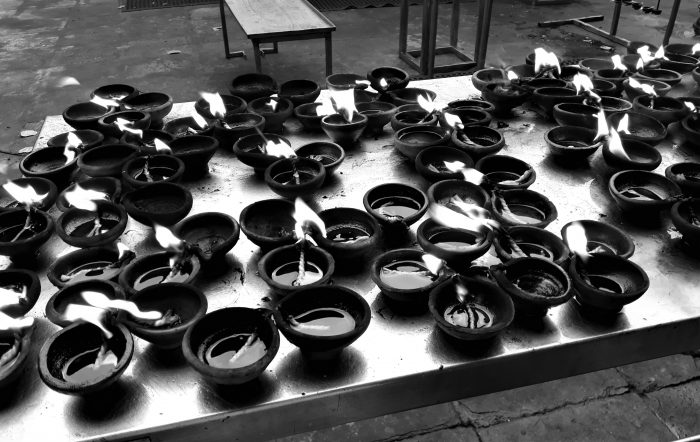
It is true that we are going through uncertain but also interesting times at the moment as the level of fear, anxiety and overwhelm appears palpable at a distance. Our individual and collective sense of predictability seems questioned right now and not knowing how all this is going to unfold is challenging us deeply and opening the ground beneath our feet. Not knowing where we are going is exposing us to a sense of groundlessness which is difficult to navigate.
What feels difficult at the moment for many is actually what Buddhist teachings are fundamentally about: the realization that impermanence is at work at the seam of things. Not that impermanence is something that inevitably befalls things at one moment or another of their existence, as it seems it is massively befalling us all at the moment, but for things to be and for us to be is in itself nothing but the manifestation of impermanence which makes Master Dogen say buddha-nature is impermanence.
Beneath the apparent everyday sense of security and solidity of things that veil reality like a sheen of illusion you have impermanence at work; impermanence as the deepest sense of groundlessness of being. That is what zazen (Zen meditation but also other forms of Buddhist meditation practices) exposes you to: that things are in constant flux, they are changing, they are moving, they come out of emptiness and return to emptiness and ultimately there is no solid enduring ground on which to stand.
Learning to let go of attachments to our view of things, of how they should be, learning to let go of the need to constantly solidify, control and protect our ground creates a sense of lightheadedness that in Buddhism we call the equanimous or the joyful mind. That joyful mind is not waiting for outside circumstances to match up to our ideas of happiness in order to present itself. It is the paradox of feeling grounded in groundlessness. That joyful mind is present in both times of ease and in times of adversity for joyful mind does not stop to pick and choose between what is likable and what is not, it does not filter events. Joyful mind is the mind that is stripped of personal preferences, of the dis-ease and agitation that comes with the incessant picking and choosing.
Challenging times offer a great opportunity to deepen one’s practice and here we are, all of us, facing this potential. It also offers us the possibility of realizing another fundamental point of Buddhist teachings: the interdependence of all things, or their dependent origination, their co-arising, pratityasamutpada in Sanskrit.
Like the waves on the surface of the water we are all connected to the same sea, here arising, there falling, in and out of the same endless body of water. Both the sea and both the wave(s) are us. And, this is something that many of us are naturally feeling in these times: gracefully moving and expanding from the narrow hold of self-centeredness into empathic concern and a deep sense of care for others and this is so freeing.
It takes for the house to burn for us to suddenly awaken to the realization that we are all living under the same roof, what a lesson!
I read these inspiring words in an article by Judy Lief today: I have often wondered: how can bodhisattvas sit there so elegantly and smile? It may be because they have learned that no matter how bad things become, it is possible to change one’s attitude on the spot. The flow of compassion cannot be interrupted. In fact, with each new crisis, its flow is increased. At any moment, as my teacher, Chögyam Trungpa Rinpoche once told me, “You could just cheer up!”
Yes, at any moment we can cheer up. Aren’t the songs coming out of the balconies of locked-down Italian towns a powerful and joyous reminder of that?
Sending much love to all of you and your loved ones. May you all be safe
 Leave a Thoughtful Comment





Read 0 comments and reply