 Share on bsky
Arguably one of the Dad’s Army most famous episodes (Deadly Assignment) features a German prisoner of war moaning that: “I do not vont nasty soggy chips. I vont my chips crisp und light brown”. I remember as kid watching that episode. In between laughing, I had an urge to go down to the local chippy . It’s what psychologists call, ‘conditioning’.
The modern story of psychology and conditioning started back in 1897 with a Russian scientist called Ivan Pavlov. (Undoubtedly, you’ve heard of him). Pavlov’s lab assistant used to feed the scientist’s dogs. Whenever the assistant was around, eager for their meal, the dogs yapped, ran about and drooled. (All indicators of a conditioned response).
Noticing this, Pavlov designed an experiment using a bell. Each time he fed the dogs, he rang a bell. Repeating this process, he rang the bell without feeding the dogs. Before long, purely on the ring of the bell, the dogs salivated – a new conditioned response.
In my book, Brand Psychology, I discuss Operant Conditioning. This involves altering a voluntary behaviour via reward or punishment B.F. Skinner is considered to be ‘The father of Operant Conditioning. Convinced that consequences influenced a person’s actions, Skinner believed human free will was delusory. Usually, unpleasant consequences ensured an action was never repeated; however, if the consequences were favourable, the actions leading to it became reinforced.
For example, he trained pigeons to perform extraordinary things – including playing a miniature piano by encouraging a pigeon with positive enforcement whenever it struck the right key.
Skinner’s Theory of Operant Conditioning was part-based on studies undertaken by Edward Thorndike (1874–1949). Thorndike’s ‘Law of Effect’ stated that any behaviour followed by rewarding consequences is likely to be repeated. A behaviour followed by bad consequences is likely to be stopped.
Thorndike studied learning in animals (mostly cats). Placing a cat inside a box he encouraged it to reach a sliver of fish (placed outside). Thorndike timed how long it took the cat to escape. Eventually, through trial and error, the cat stumbled upon a lever that opened the box. Adapting its behaviour, the cat became increasingly adept at pressing the lever.
In Skinner’s version, a rat pressed a lever or key to get food or water, and the device recorded the rat’s responses. Depending on the chosen lever or key, the rat received either a treat or an electric shock. (A gentler version involved different coloured lights.) Researchers adjusted the treat or shock response to alter the rat’s behaviour.
Similarly, in games like Candy Crush, the brain produces the neurotransmitter reward chemical, dopamine. (During the early stages of the game, winning is easy so encouraging players to continue playing and so enjoy more dopamine ‘hits’. (A conditioning technique allegedly practised by online gambling brands).
Through branding (including logos, sounds colours and so on) marketers have adapted variations on Pavlovian and Operant Conditioning theory.
For example, Coca-Cola associates its products with activities and environmental factors such as sports, dehydration and heat. (The idea is to make consumers thirsty and so reach for a cold refreshing Coke on a hot sweltering day).
Operant conditioning and classical conditioning are the foundation of behaviourism,a school of psychology.
Learning to sink or swim
Which brings me to fish and chips – but not potato chips…
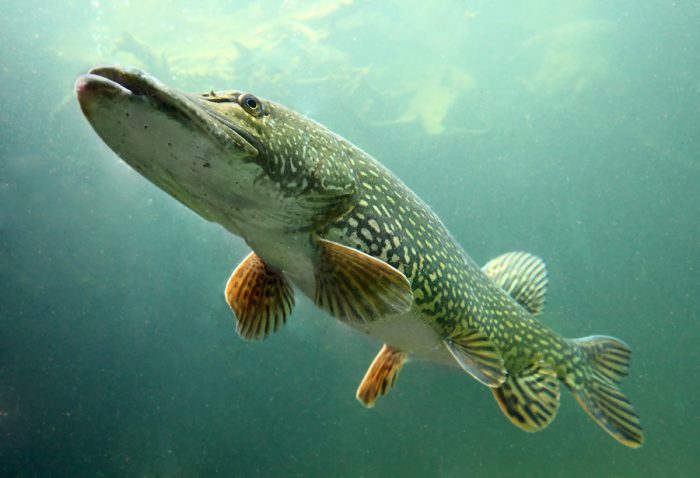
One of the most interesting conditioning experiments refers to The Pike Syndrome.
A pike fish is released into a tank. Pikes can be aggressive. They love feasting on small minnow fish and will happily peck bites all day. So, when you add minnow fish into the tank, you get one very happy pike as well as a shrinking shoal of minnow.
Next, place a plane of glass between the pike and the minnow. Whilst the shoal is now safe – the pike becomes a victim of its own hunger: it repeatedly hurtles itself towards the transparent panel, snubbing its snout on the glass as it futilely tries to reach the tantalising food. It continues on a collision course for some time. However, after a while it stops, bruised and very probably, bewildered.
Then comes the really intriguing part of the experiment…
…Remove the transparent glass screen separating the pike from the minnow and, as you would expect, the minnow (not being the brightest of little fish) start swimming towards the pike’s section of the tank. As for the pike – it remains eerily calm. Despite the minnow now swimming around the pike, the fish remains still.
Along with loss bellicosity, it’s lost its appetite. In fact, despite the mouth-watering minnow gliding around the pike, it’s lack lustre for life is so overpowering that left long enough, the pike drifts to the bottom of the tank and in time will actually prefer to starve to death rather than nip at the minnow.
This is called, Learned Helplessness.
Since the mid-sixties, experiments with animals and people have shown helplessness can be either a conditioned or learned response.
In another experiment, rats were placed directly in ice water, they could swim for up to sixty hours, but when the struggling rats were pinned down by hand until still, and placed into the ice water, they gave up and drowned.
When helplessness becomes hopelessness
Sometimes life situations can make a person feel helpless. Often the only response is to at least try to improve things as best as you can. Pike Syndrome leaves putrefying ‘chips’ on shoulders. It preys on uncertainty as well as self/group doubt. The chips weigh heavy on shoulders in personal lives as well as at organisations; unlike events beyond our control – they are self-fulfilling prophecies that exacerbate a sense of helplessness into a being of hopelessness.
Personal Helplessness
I can’t do anything.
It’s always been this way. It will remain that way.
Without her/him/them… I will never be happy.
I am condemned to this relationship/job/situation.
It’s too late to change.
I’m never given a chance …
I am useless.
Circumstances dictate I’ll always reach for comfort through eating/drink/gambling/drugs… what else can I do?
How can I enrich my life if we are all so time-poor?
Collective Helplessness
Don’t even bother – someone else has already done it and been there…
The rules/systems won’t let us…
Management/staff/head office/customers/operations/sales … never listen …
It’s not how things work around here…
Too many deadlines, not enough moments to change anything…
On the face of it, such common statements appear reasonable explanations for giving up a goal or failing to reassess in a new light. Too often, norms and tropes are convenient excuses for not bothering. They transmute into imaginary planes of paralysing glass.
Giving up on you
In truth beyond events which really are beyond reasonable control, permanent, pervasive, and personal explanations as to why things will always remain as they were often turn out to be habitually conditioned responses constructed from the haunting shadows of earlier difficulties and disappointments.
When life serves up lemons – make a mojito
At any time, anyone can suddenly find themselves wide-open to disappointments and setbacks: Bad deals… loss careers…illness… fractured relationships …vindictive divorces…broken promises… abandoned dreams… failed plans… stoically silenced loves… misunderstood needs… The trick is to acknowledge and wherever possible learn from the experiences. Most importantly, adapt to new circumstances. Only then can anyone step away from the past and look to the future. (Far harder in practice than in theory).
Like the pike, when subjected to enough failures, or allowing people to make us feel hopeless we can end up endlessly smashing noses against a glass ceiling or wall; helpless and lost.
Recalling the saying, “madness is doing the same thing time after time – and expecting a different result,” we assure ourselves that it is ok to accept helplessness.
Instead, take note of a different maxim:
“If you always do as you always did, you’ll always get what you always got.”
In the never-ending battle for a better you, act on where you are now – rather on where you were; regain control.
After all, as any fan of Dad’s Army can tell you, Pike always was a very stupid boy.
 Leave a Thoughtful Comment



Read 0 comments and reply