

 Share on bsky
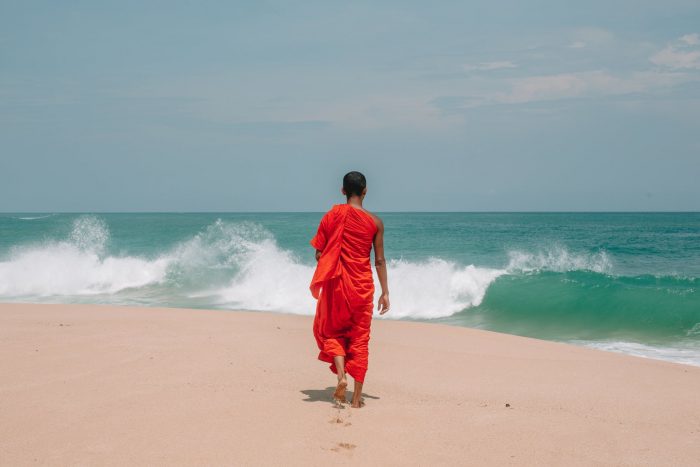
The real value of the natural activity of walking is often underrated.
There is more you can achieve with walking than just getting from one place to another.
You can also use it to meditate which will help improve your mental health in the long run.
If you have just heard about walking meditation and would like to understand it better so that you know how to approach it, then this thorough beginner’s guide to walking meditation is going to come in handy for you.
We will be looking at what walking meditation is all about and what you need to know about it as well as how to get started with it.
So, let’s get started, shall we?
What is Walking Meditation
This is a form of meditation that helps you bring your mind and body together as you move.
It’s also known as kinhin and is a great alternative to other forms of seated meditation as well as standing meditation.
If you are not a big fan of those two styles, then walking meditation can make a really good option for you.
Walking is a part of our lives and we move about when going to get coffee in the kitchen, going to the marketplace, to the gym, and many other places.
This, therefore, makes it easy to incorporate it into your routine because, other than walking, there is nothing more difficult you will be required to do to practice walking meditation.
Healthwise, this meditation is important because it helps deal with a lot of issues like depression, anxiety, and lost focus, to name a few, and hence makes a good intervention for you if you struggle with these areas.
Nonetheless, even if you will be walking almost as you normally do, here you will be taking the activity to the next level by aiming to walk “mindfully” so that you are focusing on your mind, body, and your environment.
How Walking Meditation Works
Just to give you some background information on the practice, according to the Japanese language, kinhin means sutra walk and within the Buddhist culture, it involves walking around in sacred areas whilst reciting a mantra (a word that is used to anchor the practitioner in meditation) or sutras (a collection of wise sayings or maxims or meditation scripture used to increase knowledge and insight about meditation).
However, when it now comes to you practicing walking meditation, it’s not a must that you use the same strategy.
Walking meditation, as with many other meditation styles, has evolved and become more flexible and dynamic in a way that people can use without having to be religious or spiritual.
It can be used for self-improvement, which means you can skip the mantras and sutras, and focus on being mindful of the world inside and around you, which will add value to your life.
You don’t have to do it in a religious place, you can choose to do it in a park, garden, in a safe forest, the woods, your home, or simply wherever you like so long as it’s quiet and peaceful enough for you to concentrate on yourself without getting distracted.
More importantly, for the whole practice to work you need to take charge of your mind and be in the present moment so that you stay focused and help yourself connect with whatever is around you at that moment.
Ideally, walking meditation is all about being aware of your thoughts, feelings, and sensations while you are walking while still being aware of your environment.
Now for some people, they might want to start with meditation while seated and then go out on a walk so that they are charged enough to continue meditating, and that’s still a good idea.
It all depends on what you feel works well for you.
You can go straight to walking meditation or you can first meditate while seated and when you get into the meditative state, you can then ease into walking meditation, which will be an easier transition for you.
Benefits of Walking Meditation
1. Helps with anxiety
Sometimes, due to various situations that life throws at us, we end up getting overwhelmed by anxiety. And if not well controlled, it can have health repercussions. Walking meditation has proven to be potentially effective in this area. A study carried out on young people that was aimed at understanding how walking and meditation affect the levels of anxiety found that it helped in reducing their anxiety symptoms.
2. Helps with circulation and blood sugar
A 2016 study seeking to know the effects of Buddhist walking meditation on vascular function and glycemic control in type 2 diabetes patients concluded that the exercise had positive effects, actually much better than even the traditional walking program used by patients with type 2 diabetes.
3. It is a fun approach to meditation
Walking as a way to boost your mental health is a good idea. And trying meditation outside of the known idea of sitting for long hours watching your breath and thoughts to do it while walking seems like fun.
You get to have your alone time and walk peacefully while being aware of the happening of your body and your surroundings, which makes it appear more interesting than getting into a room, closing the door, sitting, and meditating in a still position.
4. Helps with balance
A study investigating whether walking meditation helps with balance and ankle proprioception in elderly women showed that the practice led to enhanced ankle reposition sense and balance among the elderly. The results go on to show that balance performance worsens among the elders and walking meditation can really go along way in helping them regain and maintain balance.
5. Helps with depression
Depression has become rampant nowadays because of the hectic life we are living. There is a need to do away with it to ensure we remain healthy. Studies show that Buddhist walking meditation may be effective in reducing depression, vascular reactivity, and improving functional fitness.
6. Improves brain function
Meditation has always been known to help boost brain function, and walking meditation is also a form of meditation that brings about the same benefits. People who take a few minutes off their busy schedule to have a walk in the woods or forest, either as meditation or a time to reflect, always have the chance to clear their mind of any mental baggage and improve the mental performance.
How To Do Walking Meditation
First and foremost, this kind of meditation can easily be done by both beginners and experienced persons in meditation simply because taking a walk is something we all do and the only difference is that you will be meditating too. Now, to ensure that you are doing this exercise in the best way possible, here are simple yet effective steps to take:
Step 1. Find a quiet meditation spot
This will ensure that you are focused and not getting distracted or rather being watched or gazed at by other people. We all know how uncomfortable that can be. You also want to choose an area that is not so busy and one that will allow you to comfortably walk back and forth without feeling weird.
It’s also worth noting that you don’t have to choose an area that will see you go for a very long walk because in any case you are not going to a specific place but rather to meditate.
Step 2. Warm yourself up
If you prefer starting with a seated form of meditation, go ahead and do that. However, if you would like to get into walking meditation right off the bat, you should first get to the place where you will meditate and warm yourself up for the practice.
To do that, first focus on your breath, how you breathe in and out as you are standing. Be aware of the thoughts and feelings that arise as you breathe. Don’t form opinions about them or what you are experiencing. Just simply be aware.
Step 3. Start taking your steps
Now start walking slowly, slower than how you normally walk as you go to work or school or anywhere in a way you want to get somewhere fast.
Take each step slowly and be aware of how you are lifting one foot, taking it forward, and placing it on the ground as you lift the other one. Notice how you feel as you do that without judging or concluding anything. Remember it is all about being mindful of what is happening.
Step 4. Get deep into the session
As you keep taking more steps and going back on forth on your chosen meditation spot, be aware of your thoughts and sensations. Be aware of what you are feeling at that moment.
Then, be aware of the environment you are in. Be aware of the vegetation or buildings that are around you. Feel the fresh air entering your body. Take note of any smell.
Now as you walk, try also to be aware of what is happening in and around you.
If your mind wanders away and you realize that, bring back your attention to the practice and keep going.
Mind-wandering is natural but also destructive if you let it run wild on you, so you should aim to overcome it when you notice it creeping in as you do the practice.
Also, ensure that your hands are in a comfortable position as you walk to facilitate better movement. You can choose to let them stay on your sides or hold them together in front of you. However, you choose to do it just ensure that you are comfortable.
Step 5. Conclude your session
When your time is up, bring back your attention to your breath and notice how you are breathing in and out. Then in your mind make an intention to end the session, and then do it.
Something to remember is that, as you are starting out, aim to meditate for under 5 minutes and as you get more used to doing it, you can lengthen the duration of your session.
Also, try to make meditation a habit so that you are able to start noticing the benefits sooner. Persistence is needed if you are to make meditation work in your life. You can start by doing it a few days a week, and if possible, step it up to a few minutes every day after some time.
Great Resources For Learning More on Walking Meditation
* Meditation books – There are many meditation books on walking meditation that really shed light on the exercise and which can add to your knowledge.
A good example that is especially helpful is Walking Meditation by Thich Nhat Hanh. This book is a comprehensive guide in walking meditation and it will help you realize how walking can be beneficial to you especially in reducing anxiety, managing anger, and much more.
Thich Nhat Hanh, the author, is a zen master and has really influenced the world as far as meditation goes. The book will get you into his mind and his perspective on this specific practice that can be of immense value in your life.
He has also authored, “How to Walk” which complements the first-mentioned book.
* Watching meditation videos online – There are so many videos you will get on YouTube once you search, “YouTube videos on walking meditation”. Look through the search results and go for the ones that are from reputable meditation organizations and influential people. You can also use guided walking meditation videos to give you a walk-through of your first few sessions before you begin doing it on your own.
* Meditation apps – These days there are apps for everything and luckily this type of meditation hasn’t been left out. Apps make it easier to access various forms of information because all you do is download, install, and then start using them. Also, because you carry your phone practically everywhere that you go, you can access the information from anywhere.
A helpful app through walking meditation is “Walking Meditations” which contains an introduction on the practice and useful tips, three walking meditations to work with, and a place for you to note something regarding the practice.
Each walking meditation that you will be guided through has a different focus such as being fully present, calming the body, and enhancing senses such as the sense of smell, hearing among others, all of which have time specifically allocated for them.
The app was created by Mary and Richard Maddux who are popularly known for their Meditation podcast, CDs, and smartphone apps. Both have rich experience in the field of meditation.
Frequently Asked Questions (FAQs) on Walking Meditation
Question: Can I have a partner when going out for walking meditation?
Answer: Yes you can. Nevertheless, ensure that the person you carry along is invested in the practice too otherwise they will be a distraction. Ensure you explain to them beforehand what you will be doing and why you must stay focused on that. This will help them tune their mind towards the practice and make it a success for both of you.
Question: What if after creating a routine and becoming invested in the whole process I have a day when am I feeling sick but I still want to keep going?
Answer: The best thing would be for you to take a break on that day and then maybe proceed on when you are feeling much better.
Nevertheless, if you feel that you don’t want to stop and want to go regardless, first go to the hospital to get checked, and if your condition is not serious or doesn’t require rest, you can proceed. Make sure you get your doctor’s approval.
Question: Do I need a walking meditation teacher or is it something I can do on my own?
Answer: It’s an exercise you can engage in all by yourself quite easily but the trick is ensuring you are doing it constantly so that you get to reap the benefits and become more comfortable with it. However, if you feel you want to invest in a meditation teacher, feel free to get one as we all have different needs and goals.
Question: What if I’m too busy and just can’t find the time to meditate?
Answer: You don’t have to spare a lot of time for meditation, especially when you are getting started. Just a few minutes is fine. And as you get more and more immersed in it, you can try to free up your day as much as you can. Breaks from work are a good time for meditating as you will get refreshed by the practice too.
Question: Which is the best time for walking meditation?
Answer: This aspect depends on you because you know when your body is more active and less tired to carry on successfully with the exercise. You could even experiment with both and then from there decide what best works for you. While many people feel like evenings are the perfect time to take a walk and meditate, you are not limited to that. Work with your personal schedule and identify what the best time for you is.
To read more interesting meditation posts, check out this meditation website.
 Leave a Thoughtful Comment




Read 0 comments and reply