
 Share on bsky
The Pursuit of Real, Down-home Creole Cooking
Canned Fish Creole
Today, while in the grocery aisle looking for some good quality tinned tuna in olive oil to make a Pasta Al Tonnato, I saw something else a bit further down the aisle: a can of jack mackerel in tomato sauce.
Looking at the cans all in a row, my mind went back to a day when my housekeeper, Marie, had the day off but stayed in anyway, and in between doing some odds and ends, made herself dinner.
I know it was none of my business, but she wasn’t around and curiosity was killing me.
The aroma from the pan filled the kitchen.
Garlicky, tangy, spicy, with onions and peppers. You could smell the acid of lemon juice or vinegar—probably both—thyme, and definitely tomato.
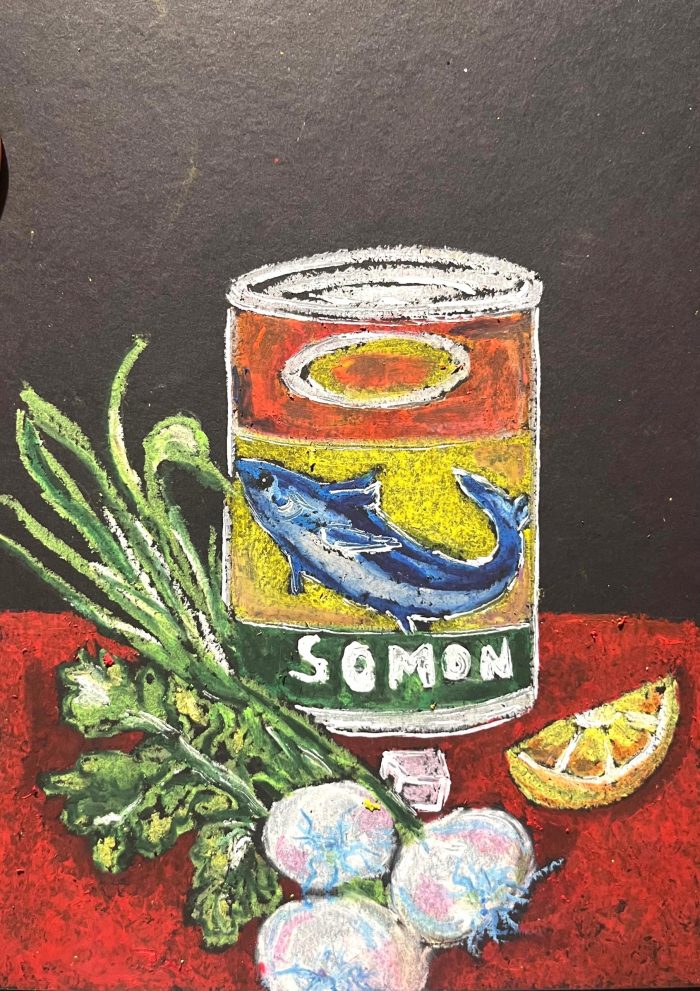
I gave in to my intrigue and lifted the cover. To my surprise it was canned fish sold under the moniker “Somon,” a Creole version of the word salmon. An ingenious gimmick for renaming jack mackerel into something more appealing. In its defense, it’s pinkish and meaty too, but a hundredth of the price—so honestly, it’s great. There’s quite a difference from real salmon, of course, but the marketing is brilliant. It works.
Swimming in a shiny, gorgeous, aromatic tomato sauce were three fat pieces of fish.
No heads or tails, no visible bones, just thick fish trunks with skin. In another pot she had made white rice. Shiny, grainy, fluffy rice steamed with a clove of garlic and finished with a knob of butter. In yet another pot were boiled plantains, bright yellow as they were on the riper side.
At that point I would normally have yelled, “Marie, can I have some??!” But her two children were there visiting, and it was probably just enough for the three of them.
Still, I couldn’t resist.
I took a spoon, broke off some fish, making sure to get plenty of sauce, and tasted it. Heavenly. The kind of heavenly that makes you teary-eyed at how good it is.
How could something out of a can taste so amazing?
The fish was firm. The sauce perfectly spicy, tangy, and thick enough to just sit on the rice majestically . There were onions and peppers dancing with garlic and thyme. I couldn’t stop at just the one spoonful, I took a piece of a baguette this time and dipped it into the sauce.
One strong, long mouth orgasm ensued.
I quickly closed the pot as this was not intended for me.
Suddenly very frustrated, I stepped away with great regret, and made myself a peanut butter and jelly sandwich. Tail between my legs. That was my dinner. I seriously could have gone for that fish.
The taste of Marie’s meal stayed with me. It haunted me for days—weeks—so much, I finally ended up buying a can of “Somon” and asked her if she could prepare it for me, without mentioning what I had seen her make for herself.
I came home from work excited, knowing my dream was about to come true. That incredibly delicious canned fish creation was all mine to enjoy and I was about to eat so well.
I lifted the pot cover. On first glance, it was nothing like what Marie had made that day for herself. Nothing at all. My heart sank.
She had made me a careful, clean version. A very light sauce. Not spicy. No viscosity. Just a few chopped onions, garlic, and basil. The fish seemed overcooked. Cooked way beyond its already cooked state. It was dry and flaky. This was a complete and total letdown.
I was so perplexed.
Disappointed.
Utterly confused.
How could something be transcendent one day and terribillus the next?
What was she thinking? She probably thought I would not have liked her version. To be fair, I normally cook and eat in a pretty clean way. But this time I wanted something down-home. Dirty. Creole.
I had a bit, and ended up taking the fish, mashing it and adding mayo and pickles to make it into a sandwich spread. That would be it’s salvation…
Today, a few months later, I would try my hand at this Canned Fish Creole—the “Somon” jack mackerel culinary masterpiece that has escaped me one too many times.
Down-home Creole cooking is no joke.
There are methods to it deeply tied to French techniques and reaching even further back into African cooking traditions.
Someone once told me that to make proper Creole food, you have to dig deep within yourself and find that primal, loose, intuitive place in your soul. You are to treat the experience ceremoniously, keeping in mind, it’s not just a meal, it’s a history paved with a tradition of tears, pain, and resilience.
Keeping that in mind, today was my day.
One can of fish. Tomato paste. Chicken bouillon cubes. Green onions. Garlic. Onions. A habanero pepper. Thyme. Parsley. Lemons and vinegar. Oil, regular vegetable oil.
I started by making my épis, a wet mixture of parsley, onions, garlic, green onions, a piece of habanero, the juice of a lemon, salt, and pepper, all pounded into a loose paste. There are no measurements, it’s done intuitively.
I poured enough oil into the pan to coat the bottom and waited for it to shimmer. I poured in the épis and let it bloom, soften, and brown. The browner the better. Then a good spoonful of tomato paste, cooked down and caramelized to remove that raw, tinned tomato taste.
Now sliced onions and green bell peppers. Let them sweat a little. A splash of vinegar. Keep stirring over low heat.
Adding some water and a good pinch of coarse sea salt.
When the sauce came together and was homogeneous, I added the fish carefully, easing it into the sauce making sure not to pour in much of the very sauce it actually came in, opening each piece slightly as to absorb the different layers of flavor.
Time to taste.
Not quite there yet, but definitely getting there.
A pinch of sugar to soften the acidity. Black pepper.
Still something missing. Ah, the Maggi bouillon cube.
If épis, and hot pepper are the Father and Son, then Maggi bouillon cubes are the Holy Spirit of Haitian cuisine.
Pure MSG, perhaps, but undeniably the ultimate flavor enhancer and staple in Creole cooking.
I crumbled it into the sauce, added another splash of water to slightly loosen everything, then turned off the heat to let the residual heat finish the dish gently.
Meanwhile, making the rice is its own science too.
I used jasmine rice, to be cooked the Creole way. Fried first in oil with a clove of garlic and salt, then covered with water. Let it boil, cover it, lower the heat after eight minutes, and let it steam properly until the bottom forms gratin, the most delicious part of any rice. Not burnt. Just deeply browned and crispy, fantastically crunchy.
All the while my yellow plantains had quietly finished cooking ready to espouse the dish.
My meal was complete.
The fish resting in its fiery red sauce. The rice glossy, fluffy, each grain separate, the gratin hidden underneath. The plantains firm but sweet.
Moment of truth. I took my first bite.
This.
This was what I had been yearning for.
An explosion of flavor. Vibrant, fiery, alive, and deeply comforting. In a word, Creole.
Flavors that perfectly meld with one another. A rudimentary sauce that has exquisite balance, depth and texture, not too thick, but definitely not thin.
Only thing missing, a slice of the obligatory avocado! Easily remedied, my kitchen is never without. Tragedy averted, the most perfect creole meal was right in front of me. It was absolutely wonderful, in every way.
I feel like I ate most of it with my eyes closed out of sheer happiness and satisfaction. Until the very last bite.
There’s something about Haitian food that sets everything right. No matter what kind of day you’ve had, no matter how you’re feeling, it is both a remedy and a celebration. A reminder of ancestry. An homage to everyone who contributed to the cuisine as we know it. Through the Transatlantic Foodways and all that it sadly entails, colonization, tragedy, survival, ingenuity, and the hard won victory of independence.
It is felt and tasted it in every meal, in every bite.
Later on, I shared the dish with Marie. I couldn’t quite read her expression. Maybe surprise, or confusion. Maybe understanding. Perhaps she realized that what I had wanted all along was not simply the food itself, but to eat the way she had eaten that day, and every day. Something humble, deeply familiar, and absolutely extraordinary.
From then on, Marie loosened up when she cooked Creole food for me. She eventually fully immersed me into her world of sometimes too much oil, too much hot pepper, stews that cook for hours with the toughest cuts of meat, and canned fish, as the main ingredient. Whatever, it’s all good. Not only good, it’s delightful. An obligation. It’s necessary soul food, in the truest way.
Now, looking back, I just realized that Marie had made the fish for me that day the way I cook the canned tuna for Pasta al Tonnato. A simple sauce I put together with some canned tomatoes, and garlic, capers, and basil. On top of pasta with some Parmesan and bread crumbs. She thought that’s what I wanted.
Not that day.
Bless her heart.
Did you love this dscriptive recipe for soul food? You might like to read Vanessa’s previous article next:
 Leave a Thoughtful Comment








Read 0 comments and reply