

 Share on bsky
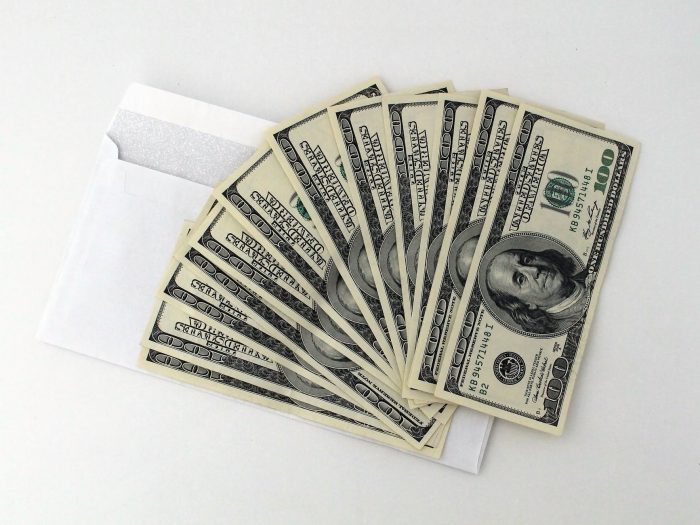
There have been six world reserve currencies since 1450, including the dollar. Each worldwide reserve currency has lasted between 80 and 130 years. The dollar has been the world reserve currency for 77 years as of this writing. Let’s take a look at each of the previous five global reserve assets.
Portugal — The Portuguese Real was the dominating currency from 1450 to 1530 as Portugal expanded into a global commercial empire because to breakthroughs in navigational technology that allowed them to reach new markets in Africa, Asia, and, eventually, America after it was discovered. The Real was a silver coin with a somewhat uniform weight that was naturally scarce. However, due to the Portuguese succession problem, Spain conquered Portugal and merged the two kingdoms to form the Iberian Union.
Spain — After the invasion of Portugal, the Spanish Real became the dominating currency. Originally, the coinage, like the Portuguese Real, was made of pure silver. However, in order to fund the Thirty Years’ War, King Phillip II of Spain began to debase the money by incorporating other, less expensive alloys into each coin, so reducing the amount of silver. More coins flooded the market, and each coin contained less silver. The value of the Real gradually fell, and the Dutch were able to defeat the Spanish and gain their independence.
My article is a family member of guest posting websites which has a large community of content creators and writers.You are warmly welcome to signup and publish a guest post with a do follow backlink no matter in which niche you have a business. Follow your favorite writers, create groups, forums, chat, and much much more!
The development of the Dutch East India Company developed trading posts all over the world, and at one point, Dutch merchants handled 50% of Europe’s imports and exports. As a result, the Guilder became the world’s leading currency during the 17th century. The Guilder was intended to be a return to sound money because each coin was made of pure silver. However, Britain’s Navigation Act, which barred the Dutch from lucrative Caribbean trading routes, triggered the first of four Anglo-Dutch wars. Due to the inability to manufacture more silver to fund the battles, the Guider was also diluted, and the currency was debased. The Dutch East India Company and the Guilder as a global currency were destroyed by the eventual saturation of the spice market, the costly Anglo-Dutch wars, and the economic difficulties caused by a devalued currency.
France – Following the demise of the Dutch empire, the French came to prominence in Europe under Louis the 14th, the Sun King. The Franc, which was originally a silver currency, was subsequently supplanted by paper bonds known as Assignats to finance France’s engagement in the American Revolution and the monarchs’ excessive spending. This depreciation eventually led to a financial catastrophe, which prompted the 1789 French Revolution and saw Napoleon Bonaparte emerge to power. In 1800, the Banque de France was established and tasked with creating a new national currency. The result was the first contemporary gold coin with a consistent weight. Economically, this sound money was a huge success, and even though Napoleon fell soon after, following governments adopted many of the gold Franc’s features, including the weight standard.
Britain — Britain’s victory at Waterloo ended France’s world domination and ushered in the Industrial Revolution. During this period, the Pound Sterling, which has its roots in sound money, became the global reserve currency. The term “pound” refers to the initial currency, which was a unit of account equal to one pound of silver. The money subsequently moved to gold coins, but it was still weight-based. The Bank of England produced bank notes that were entirely backed by gold, creating what is now known as “The Gold Standard.” However, history has a habit of repeating itself, and Britain was no exception. To fund World War I, the gold standard was suspended, and treasury notes were made legal money. Prior to WWI, the United Kingdom possessed the world’s strongest economy, but the country was deeply in debt following the war. The British empire was nearly bankrupt by the end of World War II.
Before we move on to the dollar, you may be asking if the Pound is still in use today. You’d be correct. The contemporary Pound, at 326 years old, is the oldest currency still in use today and, by that metric, may be called the most successful currency ever developed. Just one minor issue: the pound’s value has fallen by 99.5 percent over its existence. So, possibly the most successful currency of all time is now worth a fraction of what it once was, owing in large part to the abandonment of the gold standard.
Academic Master is a US based writing company that provides thousands of free essays to the students all over the World. If you want your essay written by a highly professional writers, then you are in a right place. We have hundreds of highly skilled writers working 24/7 to provide quality essay writing services to the students all over the World.
As can be seen, each global reserve currency began with sound money fundamentals. Economic pressures such as a large amount of government spending, a navigation act, financing wars, a financial crisis, or a global pandemic would invariably produce incentives to focus on the short-term benefits of loose monetary policy. In each case, this change resulted in the depreciation of the currency and the deterioration of the country’s economy. The economically (and militarily) stronger state eventually replaced the current currency with its own, resulting in a return to sound money. The cycle would then repeat itself, and a new global reserve currency would emerge 80–100 years later.
The fiat trap
Following the end of World War II, 44 countries negotiated and signed the Bretton Woods Accord in 1944. This accord provided the cornerstone for the next 80 years of global economic, geopolitical, and international diplomacy. The consequences of that accord are still being felt today, such as the growth of the dollar as the world reserve currency.
 Leave a Thoughtful Comment






Read 0 comments and reply