
 Share on bsky
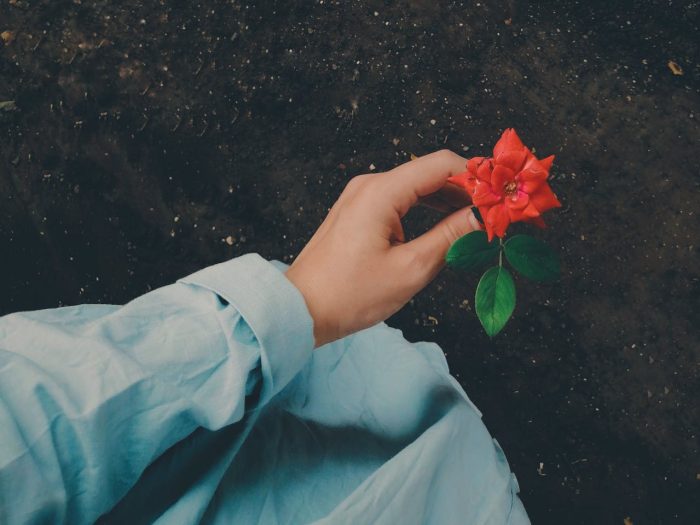
The Garden I Could Tend Right Now
Last spring, I planted a balcony garden.
For the first time in over 40 years, I live in an apartment—a two-story condo above my yoga studio in a cobblestone village, an urban island in the northern corner of my suburban city hugging the Pacific Ocean.
I have two balconies, each about five by ten stretches of slatted wood flooring and five-foot-high fencing with decorative heart and teardrop shaped openings my dogs like to stick their snouts through, to the delight of onlookers tilting their heads before smiling. On the back balcony, I laid out portable plastic beds, soil, fertilizer, and sprouts of Swiss chard, artichoke, blue kale, cherry, and beefsteak tomatoes. The tomatoes yielded a plentiful harvest and petered out late fall. The kale and Swiss chard are still surviving, though stunted. The artichoke is hanging in there, never reaching its potential due to shallow soil.
This was not the garden I once had. It was the garden I could tend right now.
That distinction took me time to understand. Recovery asks the same thing of us: not the life we imagined, not the version of ourselves we planned to be, but the honest, humble work of tending what we have, in the space we are given, with the tools currently in our hands. Incremental growth, blossoming, and fruiting takes time. Enjoying each tiny new leaf as it springs forth is a quiet thrill. You learn to want that.
I have greater ambitions for this spring—flowers and vegetables in blue, red, yellow, orange, green, violet, and indigo. But I will begin again with what I know and try to learn the rest. That is enough.
The Inheritance of Gardens
My mother was an avid gardener of fruit trees, flowers, and lawns. She nurtured a half-acre plot of dirt with seed and twigs that flourished throughout my childhood. When she moved across the country to warmer climes, her garden was the same, only with west coast varietals. I did not inherit her talents—but I inherited the gene to try a hand at something that takes firm root and reaches heights heart-lifting to witness and oversee.
Her hands were shaped for diapers, baby bottoms, knitting needles, earth, and seeds. Mine curve around pens, computer keys, yoga mats, and cello necks. She knew, instinctively, what I must look up: what to do when kale bursts forth eagerly and then falls ill with white ash, when the artichoke needs deeper soil, when to prune and when to leave well enough alone. The foxtail agave in my ground-floor patio has grown nearly to the height of the five-foot fencing. My mother would have known how to trim it. I do not.
I watched her garden get plowed under by new owners—20 rose bushes in red, pink, mauve, lavender, and fire-orange, and a yellow-flowered bush that bloomed at the start of Tet each year, all ripped from the earth and replaced with manicured lawn. That one was hard to see. Some losses are like that: not dramatic, just quietly final, a thing of beauty simply gone.
Recovery acquaints us with that particular grief—the gardens we tended that were taken, or that we ourselves destroyed, or that simply ended when the season did. The work is not to replant them exactly. It is to carry what they taught us into the next plot of earth.
A Season for Everything
There is a season for everything. Children are earth and water—close to life’s bones, full of wonder and trust, oblivious to the fingernail dirt and knee bruises. Householders are fire and fury, catching the flame of ambition, career, family, and fists against the immovable objects in labyrinthine lives. And seasoned senior life is airy, silver filaments of realization, acceptance, and quiet contemplation.
Recovery does not exempt us from these seasons—it moves through them with us. In the earth-and-water years, recovery means learning that we are not invincible, that some seeds we toss carelessly will take root in ways we didn’t intend. In the fire years, it means learning to tend our ambitions without burning the garden down. In the silver years, it means accepting what grew, grieving what didn’t, and finding, in that acceptance, something worth passing on.
We learn our habits by patterning our lives in a brief, somnambulant dance of doing, striving, falling, and recovering. All life is a lesson in growing from mistakes—from the lemon tree that grew vicious spikes after inviting in the seeds of an invasive species, to the overwatered teacup roses. We plant seeds everywhere, tending some mindfully and meaningfully, tossing others haphazardly, yielding pleasant surprises and frustrating disappointments. The garden does not judge the gardener. It simply responds.
Tending Other People’s Gardens
Below my makeshift balcony garden, I run a small boutique yoga therapy studio. Small group classes and individual sessions breathe with healing movement and intention—to aid, inspirit, and encourage others to grow in recovery from physical and emotional injury, addiction, and grief. The studio is decorated in clouds and waves beaming chakra colors: red, orange, yellow, green, blue, indigo, and violet.
The same colors I want in my spring garden. That is not an accident.
Root to crown, earth to sky—the body maps what the garden shows us. Recovery moves upward from the ground: stability before growth, safety before flowering. You cannot skip the red of the root and arrive at the violet of the crown. The soil must be right first. In three years of yoga therapy training, and a fourth year of practicum now stretching longer, I have watched this truth prove itself repeatedly in the bodies of people learning to live differently.
Sustaining hope from small wonders can forge a path that requires real work but holds great promise—like submerging stakes deep into the earth to support the budding tomato plant’s rising. Hands, helpers, community, connection, desire: these sustain our recovery journeys, building healthy lives, grieving losses, and accepting life’s ebb and flow.
Recovery: We Are the Gardens and the Gardeners
Recovery starts from desire, as does all life, and falters in silent disconnection. There is a time to speak, to reach out, to lean on community to evolve—beginning always with the self. Audre Lorde, writer, poet, and activist, understood the cost of self-neglect as clearly as anyone in recovery does: the way we disappear into silence, into hiding from uncomfortable truths, until we are barely tending ourselves at all. Her corrective was radical in its simplicity:
“Caring for myself is not self-indulgent. Caring for myself is an act of survival.”
Spring is a time for gardening: self-care and renewal. It is the season of recovery of what seems lost but is only hidden beneath nutrient-rich soil. The kale that looked dead in January. The artichoke that never reached its potential but is still, stubbornly, there.
When our will aligns with our purpose—to become our true selves, long buried beneath layers of compressed potential—we shed winter’s bony grip and bloom our living colors: red, orange, yellow, green, blue, indigo, and purple.
We are the gardens and the gardeners both. The tending is the recovery. The recovery is the tending. Begin again, in whatever space you have, with whatever soil is available. Something real will grow.
~
 Leave a Thoughtful Comment






Read 0 comments and reply