
 Share on bsky
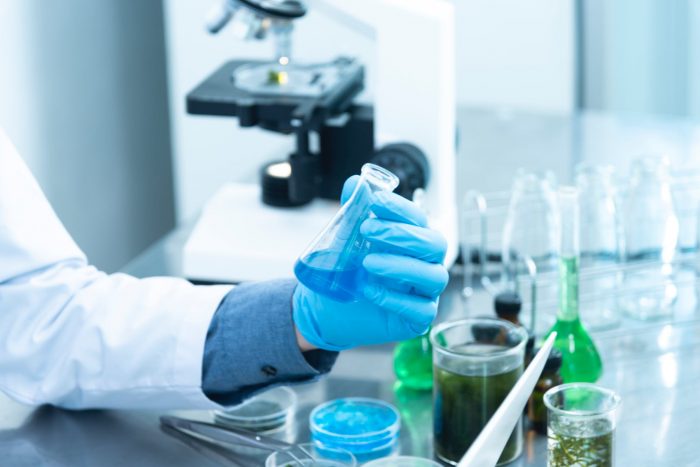
The site of a 15-year-old industrial catastrophe in Texas is destined to play a key part in the creation of the United States’ next generation of sustainable materials.
The Stafford, Texas complex, which is surrounded by refineries and chemical factories, has been given a new lease of life as the flagship facility for Solugen, a business that aims to overhaul the whole chemicals sector.
Academic Master is a US based writing company that provides thousands of free essays to the students all over the World. If you want your essay written by a highly professional writers, then you are in a right place. We have hundreds of highly skilled writers working 24/7 to provide quality essay writing services to the students all over the World.
Solugen is among a group of American companies paving a new path for the multibillion-dollar chemicals industry.
Sugars and plant-derived enzymes are being used to replace the petroleum, natural gas, and coal that provide the majority of the raw materials for chemical production (which are used in most cleaning supplies, clothing, containers, coatings, cosmetics, flavours, and fragrances that are all part of industrial production).
Solugen is creating the basis for large-scale bio-manufacturing alongside companies like Boston-based Ginkgo Bioworks*, which is developing a discovery tool and initial uses of genetically modified organisms, and a slew of early-stage companies.
Solugen’s co-founders, CEO Gaurab Chakrabarti and CTO Sean Hunt, equate the new chemicals company to the semiconductor industry and compare themselves to Intel, the chip manufacturing behemoth.
But, unlike Intel, Solugen has the ability to position itself not just as a maker of its own chemicals, but as a manufacturer of chemicals for the entire industry.
Intel’s advances, according to Chakrabarti, “were able to take design and process and actually bring it to scale.” “This is what synthetic biology has lacked. Fundamentally, it’s a question of economics.”
Solugen creates and grows enzymes that convert carbohydrates into the chemicals that manufacturers require. Businesses that make anything from concrete to detergents, fertilisers, and even water treatment employ its goods.
My articles is a family member of free guest posting websites which has a large community of content creators and writers.You are warmly welcome to signup and publish a guest post with a dofollow backlink no matter in which niche you have a business. Follow your favorite writers, create groups, forums, chat, and much much more!
Plastics, textiles, detergents, softeners, sweeteners, paints, coatings, and films are all made by companies working at the confluence of chemistry and biology.
Allozymes, Arzeda, Lygos, Mellizyme, Rubi Laboratories, and Twelve are among the companies that have developed ways to identify novel enzymes or use those enzymes to create new products. Rubi and Twelve also profit from the fact that their materials are made from carbon dioxide.
In the effort to minimise greenhouse gas emissions and develop a more sustainable future, replacing oil and gas in the chemical cycle is vital.
Chemical manufacture uses more oil and gas than any other industry on the earth, and it is the third-highest carbon emitter behind iron, steel, and cement.
“Only a few percentage points of global greenhouse gas emissions are attributed to the chemicals industry. Clay Dumas, a managing partner at LowerCarbon Capital and a Solugen investor, told CNBC that “zeroing out CO2 from the chemicals business can’t happen soon enough.”
So far, Solugen has been the only company to successfully manufacture chemicals at the scales required by the worldwide industry. At the moment, it employs a 20,000-square-foot plant to produce 10,000 metric tonnes of chemicals.
Those figures are impressive when compared to the size of other companies in the field, but they pale in comparison to the size of a normal chemical factory, which may produce hundreds of thousands of tonnes of chemicals.
Nonetheless, the pace with which Solugen has progressed from a laboratory experiment to a commercial facility is unrivalled.
“I visited Solugen’s headquarters in Houston in 2016.” They were subleasing a little portion of a larger lab, and it was one of the sketchiest labs I’d seen, but the Solugen founders liked it since the rent was low,” said Seth Bannon, a founding partner of the investment firm Fifty Years, to TechCrunch in 2019. “Sean and Gaurab were very outstanding. We invested since they had their prototype reactor up and running and were already selling 100% of its capacity.”
The industry need a game changer in the form of the ability to mass generate bio-based chemicals. And if Solugen can become the de-facto producer for a variety of chemical processes invented by other companies, it might significantly accelerate the growth of the green chemicals sector.
offline data entry services are the secret sauce many organizations have used to improve customer experiences, innovate products, and disrupt entire industries. At CloudFactory, we’ve been providing data entry services for more than a decade for more than 360 organizations. We’ve developed the people, processes, and technology it takes to scale data entry without compromising quality
One of the major components of this strategy is the ability to create enzymes rather than organisms. “When you’re attempting to manufacture a specific molecule, the organism’s other functions come in the way of targeted production,” Chakrabarti explained. “That’s when the cell-free option becomes so appealing.”
Green chemistry still faces significant challenges in reaching its full potential, but Solugen’s bioforge reactor demonstrates that a road to a more sustainable chemicals sector exists. And now is the time to put it to use.
 Leave a Thoughtful Comment





Read 0 comments and reply