
 Share on bsky
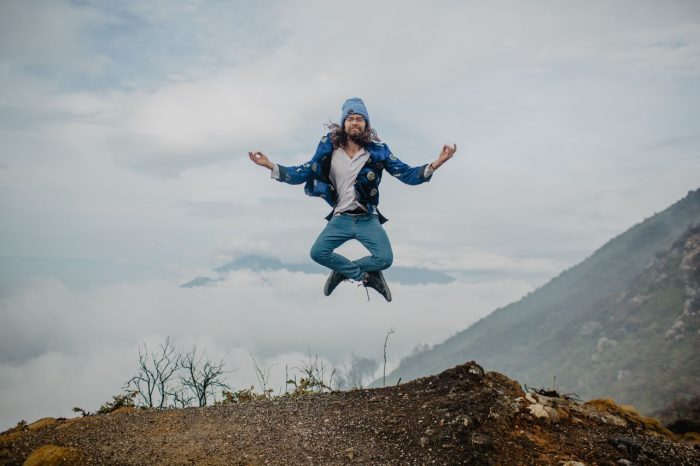
To walk a spiritual path is an inner quest.
To pursue this path we need to know ourselves and investigate the world within.
So much of life in today’s world is about being busy and being seen by others. In many ways, our collectivity is out of hand. We are seldom truly alone faced with true introspection. Even when we do take time away from the busyness of life, we are probably looking at social media or watching something on a screen.
If we are fortunate enough, we will see that there is more to life than what’s happening in the physical and online world, that there is some kind of deeper life to tap into. For many people, this comes from a sense of overwhelm. Life feels too much so they search for a sense of peace and composure. This may lead them to the practice of yoga, meditation, or the like, and they might find a sense of respite through their chosen practice.
Some people may feel so passionate about their spiritual practice that they pursue it to the exclusion of all else, thus deepening this inner calm even more.
With this sense of lofty peace can come a sense of distance from the world, a detachment from things. As we progress on the path of inner peace, we can find ourselves ascending a metaphorical mountain (or a literal one for some) that removes us from the world and its woes.
This has often been the topic of debate in spiritual circles. In fact, it is said to be at the heart of the divide between Theravada and Mahayana Buddhists when many of the former retreated into the forest while the latter stayed in the human world to be of benefit to it.
I guess from the tone of my phrasing you can tell which party I would have sided with: Team Mahayana. But I’m not here to win a doctrinal war. The example is just to exemplify a key dilemma: to save myself or to save others? And in order to save others, do I need to first save myself?
The obvious answer is “yes,” in order to be of service to others, I need to take care of myself. In order to enlighten others, I need to gain enlightenment myself.
But then it gets a little murky. Can I really enlighten myself if I don’t engage with others? Can I know whether I’m really enlightened? Sure, if I just want to meditate, the best place for that is in a cave or a forest, away from all kinds of distractions. Then I will develop that sense of peace and composure that I so desire. But how will I know how deep that state is if I have no one to test it with?
The solitary life in the cave or mountain will provide me with no obnoxious people on public transport who play music without headphones, no weeds in the lawn that refuse to go away, no politicians who say one thing and do another, and probably no chia seeds that get logged between my teeth. In short, complete and long-lasting solitude provides us with no opportunities to test our peace and composure. We also have to ask whether solitary spiritual practice can in fact develop all our inner capacities.
This doesn’t mean that solitude is not important. I know personally that I cannot live without it. Regular periods of alone-time feed and sustain me, and without them, I would have no peace and no composure.
And periods of retreat to engage in spiritual practices like meditation and yoga are also important because they give us the chance to remove the distractions of the world, especially the modern world, and concentrate solely on the method at hand.
But I don’t think retreat is an end-in-itself. It is a means to an end, a way to prepare ourselves to be of service to others.
Another way that the altruism of our spirituality is proven or not is when we face ethical decisions.
In many spiritual traditions, there have been instances when spirituality is seen to transcend ethics. People think that the guru or the master lives in some lofty abode beyond right and wrong, so whatever he or she does is holy. If the master gets angry, that is a sign of righteous indignation. If the master hits a disciple, that is for their spiritual training. If the master fondles someone’s boobs or balls, that is seen as a spiritual act imbibed with wisdom.
But beyond the pitfall of guru worship, we can all fall into this trap. As we develop a deeper sense of peace and composure, we can come to think that we too have transcended the bounds of right and wrong. We can think that everything we do is a necessary and justified part of a spiritual life. This might manifest as being aloof in relationships and not being there for people when they need us. Or it might be a disregard for ethical decision-making based on the problems in the world.
But can we really divorce ethics from spirituality? Isn’t doing the noble thing part and parcel of a spiritual life? I’d say it is. And if so, that means that spirituality is not just aimed at my peace and composure, but on the betterment of all beings, at a spiritual, mental, emotional, and physical level.
So even though spirituality has its basis in the individual, it is communal in scope. Even though it involves solitude, aloneness finds its meaning and purpose in relation to others.
~
 Leave a Thoughtful Comment






Read 0 comments and reply