
 Share on bsky
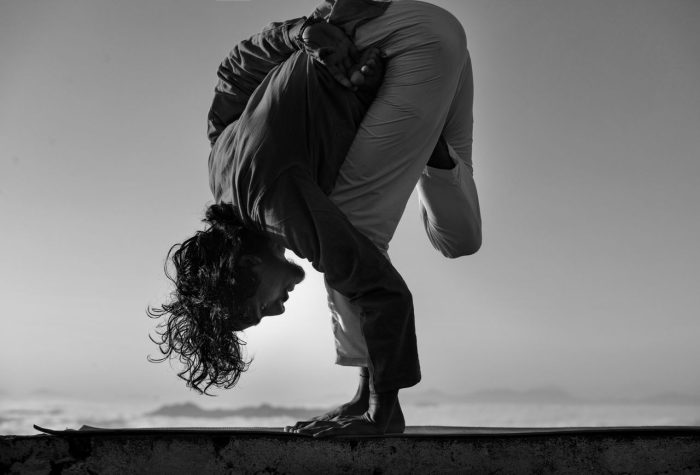
It was five in the morning in the Himalayas.
Three days after her certification, one of our graduates was sitting cross-legged on her mat in the training room, the kind of silence around her that only arrives before sunrise in the mountains.
I thought she was meditating. Then I saw her shoulders shaking.
She was not crying from exhaustion. She was not crying from pride. When I sat beside her and asked what had come up, she said something I have never forgotten: “I thought I would feel more like a teacher now. Instead, I feel less like a yogi.”
I did not try to fix it. I recognized it.
Because I had felt it too.
There is something that happens the moment we receive a yoga teaching certificate that nobody in any training talks about, not really. We talk about sequencing. We talk about adjustments, about holding space, about finding our teaching voice. We talk endlessly about what we will do for our students.
What we do not talk about is what quietly happens to our relationship with our own practice.
Before the certification, the mat belongs entirely to us. We arrive, we move, we sit. Nobody is watching. There is no performance, no structure to offer, no framework to hold. The practice is just the practice, messy and honest and ours.
The day we become teachers, that changes. The mat becomes a rehearsal space. Savasana becomes the moment we plan tomorrow’s class. We notice our own body the way we will soon notice our students’ bodies, with assessment rather than feeling. We lose the quality of being the one who is learning, and we have not been warned that we might miss it.
In more than 12 years of teaching across India and Europe, including residential programs at Yoga Chaitanya International Institute in Goa and the Himalayas, I have watched this pattern arrive in almost every new teacher. It is not a failure. It is not a sign that someone is not ready. It is, I have come to believe, the most honest and underacknowledged initiation in modern yoga.
The teaching identity is real, and it is useful. But it is also, if we are not careful, a new layer of citta vritti.
Patanjali’s Yoga Sutra 1.2 defines yoga as yogas citta vritti nirodhah: the cessation of the fluctuations of the mind. The Sutra does not distinguish between student and teacher. It asks the same thing of both. When the identity of “yoga teacher” becomes something we perform rather than something we inhabit lightly, it becomes one more mental fluctuation, one more story the mind tells about who we are. The very practice we are transmitting asks us to quieten that story. The identity asks us to maintain it.
This is the tension nobody names in the training manual.
In the traditional Indian gurukul system, a student did not begin teaching until the teacher observed something specific: not technical mastery, not articulacy, not even depth of practice. What they were watching for was whether the practice had moved inward. Whether the student had stopped needing an audience for it. Whether they could hold the knowledge without performing it.
What we have built in modern yoga is structurally inverted. We certify people who are technically capable and then release them into a world that immediately begins rewarding their teaching persona: their Instagram presence, their class count, their specialty style, their brand. The system pulls the new teacher outward precisely when the tradition would have asked them to go deeper inward.
I do not say this as criticism. I say it because I lived it. There was a period in my early teaching years when I was, by every external measure, becoming a better teacher. My classes were fuller. My adjustments were more precise. My sequencing was more intelligent. And underneath all of it, my own practice was slowly becoming a demonstration rather than a conversation.
A senior teacher I studied with in India noticed it before I did. He did not say much. He simply asked me when I had last practiced without knowing what I would teach afterward.
I could not answer.
What changed after that was not dramatic. I did not stop teaching or teach less. What shifted was something internal, a decision to hold the teacher identity more loosely, to return to the mat without an agenda, to let myself not know things again.
The practice became honest in a different way. Less polished, more alive.
And something else happened, something I did not expect: the teaching improved. Not the sequencing. Not the technical quality. The quality of presence. Students began saying things like, “I feel like you’re practicing with us, not demonstrating for us.” That is the thing a certificate cannot teach. It can only be found by the teacher who is still, genuinely, a student.
The woman in the Himalayas training room that morning was not losing something. She was arriving at the real beginning.
The grief of feeling less like a yogi after becoming a teacher is not a warning that something has gone wrong. It is the practice of telling the truth. It is the first honest thing yoga says to us after we have claimed the title.
We become teachers. And then, if we are willing, we spend the rest of our lives learning what that actually means.
What would it ask of us to hold the teaching identity lightly enough that the practice underneath it could keep growing? What would we need to surrender to find out?
~
 Leave a Thoughtful Comment






Read 0 comments and reply