
 Share on bsky
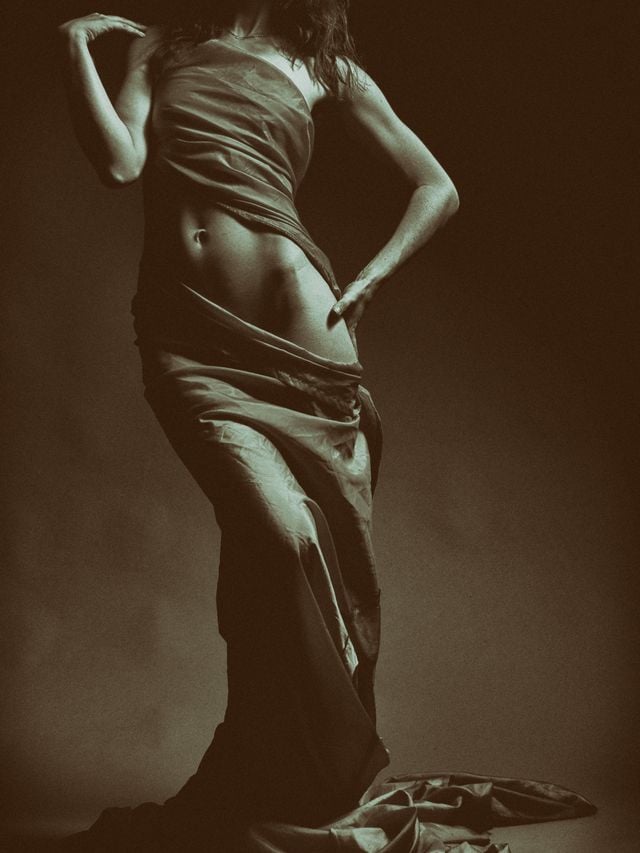
I had imagined stares.
Discomfort.
Someone saying something cruel or reductive. Instead, the room was quiet and focused, and the only thing people said was that it was beautiful. What shifted inside me in that moment was not confidence exactly, it was something closer to relief.
For the first time I felt seen as a whole human being, not a collection of parts to be evaluated or covered up.
That experience sent me down a path I have been on ever since, photographing nude movement, shooting yoga and dance, working in body-positive spaces where the body is the subject but rarely the point. And the thing I keep coming back to, the thing that still surprises people when I say it, is how ordinary it all becomes. The shock wears off fast. Once it does, people stop seeing bodies and start seeing people. Personality. Energy. The way someone carries themselves. The way they make others feel.
The body is still there. It just stops being the entire story.
We are living through a strange contradiction. We have more exposure to bodies than any generation before us, more images, more access, more content, and yet so many people describe feeling profoundly disconnected, lonely, and unseen.
More bodies, less contact with actual human beings.
Part of what I think we have lost is the difference between sensuality and sexuality. They are not the same thing. Sexuality is one expression of being in a body. Sensuality is broader—the experience of being present, of feeling texture, and breath, and emotion, of being moved by another person’s existence. It is what makes intimacy feel like intimacy rather than transaction.
When nudity collapses entirely into sexuality, we lose access to that wider register. Everything funnels into one channel, and the channel gets noisier while somehow carrying less.
Humans have not always experienced the body this way. Ancient Greek athletes competed nude. Many indigenous cultures lived with forms of nudity that carried none of the shame or fixation common in modern Western life. Nudity and sexuality were understood as different things, not because desire did not exist, but because a body was not automatically a proposition.
Somewhere along the way many of us began collapsing them together. Nudity became sexuality. Sexuality became performance. Bodies became content. And once a body becomes content, it becomes something to consume, which means the person inside it disappears.
That disappearance has consequences. When we stop seeing the human being behind the body, curiosity dies. We stop wondering who someone is, what shaped them, what they love, what they have survived. Attraction without curiosity cannot build real intimacy. It can produce fantasy and stimulation, but it cannot produce the feeling of truly knowing another person, which is what most people are searching for, even when they think they are searching for something else.
The strongest intimacy I have experienced has never come from a body alone. It came from feeling connected to the person inside it, their humour, their history, their particular way of seeing the world. The physical becomes richer when it is attached to something deeper. Not less sexual. More meaningful.
The question worth sitting with is not whether nudity means sex. It is whether we still know how to see the whole person—body, and history, and mess, and beauty—at the same time. Because when we can hold all of that together, something shifts.
We stop consuming and start connecting.
~
If you enjoyed this, we’re sure you’ll enjoy Rhyanna’s previous article:
 Leave a Thoughtful Comment





Read 0 comments and reply