
Complete Protein? Complete Nonsense.
The Nutrition Myth that Just Won’t Die
Five of the many things I learned during my 15-month stint as a raw vegan:
1. You can live – thrive — on just vegetables, fruits, nuts and seeds.
2. What we eat has a huge and immediate effect on our well-being.
3. We really don’t need much protein.
4. Complete protein is a myth.
5. Everyone who eats considers themselves a nutrition expert (see #3 and #4).
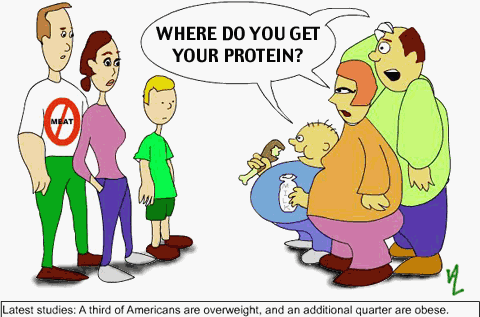
When I was “raw,” I positively glowed, so points 1 and 2 were readily apparent to most anyone who saw me. Confounded, people would often harrumph, “Well where do you get your protein?”
Ah, the protein question. I’d smile and explain that there’s plenty of protein in a vegan diet (even one without grains or beans!), that humans don’t really need as much protein as the meat and dairy and “fitness” industries would have us believe, and that, in fact, too much protein (especially animal protein) has been overwhelmingly correlated with cancer (both in the lab and epidemiologically).
Enter points 4 and 5. People would pause, rummaging through their What To Say To A Vegan file, and triumphantly display the “complete protein” clause: “Yes, but plant protein is incomplete protein, and so you need to be really careful to combine foods properly so you’re not deficient!!!” Then they’d look at me with a strange mixture of smugness, concern, and confusion.
The Great Complete Protein Myth has been recanted over and over and over again, but people insist on continuing to believe it. Not only that, they propagate it further by repeating it without checking their sources. Look, I’m not here to tell you never to eat meat or dairy — that’s your business, and if it works for you (and you’re sourcing it in as ethical a way as possible), great. But please don’t eat animal products because you think you need to, because that’s false and often harmful; and please don’t tell vegans they’re going to be protein deficient or need to take special care to combine their proteins because that’s false and really annoying; and let’s please have some humility about our nutritional expertise and open our minds to the possibility that we’ve been fed (no pun intended) some inaccurate information.
So here’s the low-down:
All protein, whether from eggs or foie gras or cauliflower, is made of amino acids. Of the 22 standard amino acids, there are eight that the human body cannot synthesize from other compounds: we must get these directly from our diet, so they’re called essential. The infamous eight are: isoleucine, leucine, lysine, methionine, phenylalanine, threonine, tryptophan, and valine.
While all animal foods contain all of those 8 amino acids, not all plant foods do (or, rather, some plant foods contain one in only trace amounts).
In her 1971 classic, Diet for a Small Planet, Frances Moore Lappé suggested that
plant proteins were incomplete, and so vegetarians had to pay special attention to food combining to ensure they got complete protein (e.g. combining beans and rice). This suggestion has since been found unnecessary, and Lappé herself recanted her position in later editions of the book:
In 1971 I stressed protein complementarity because I assumed that the only way to get enough protein … was to create a protein as usable by the body as animal protein. In combating the myth that meat is the only way to get high-quality protein, I reinforced another myth. I gave the impression that in order to get enough protein without meat, considerable care was needed in choosing foods. Actually, it is much easier than I thought.
With three important exceptions, there is little danger of protein deficiency in a plant food diet. The exceptions are diets very heavily dependent on [1] fruit or on [2] some tubers, such as sweet potatoes or cassava, or on [3] junk food (refined flours, sugars, and fat). Fortunately, relatively few people in the world try to survive on diets in which these foods are virtually the sole source of calories. In all other diets, if people are getting enough calories, they are virtually certain of getting enough protein.
Plant-based diets contain plenty of protein.
A varied vegan diet contains plenty of all the amino acids.
Our bodies store amino acids, so even if you don’t get all eight essential amino acids in one meal, it’s ok!!
The way we obsess about protein in this country, you’d think protein deficiency would be an epidemic. It’s not. In fact, excessive protein consumption is a far bigger concern in developed countries.
Protein’s a crucial part of our diet. In fact, it’s recently been suggested that meat (especially cooked) helped us evolve bigger brains. It’s quite possible that including some animal products in your diet might be best for you. But if that’s the case, it’s because of something other than this complete protein issue.
The fact that you eat food does not make you a nutrition expert any more than driving a car makes you a mechanic.
So that’s all, kids. Eat your fruits and veggies, and go on with your lives. May all beings be loved and well fed.
For more info, check out these great sources:

Vegetarian Protein Information.
And no, you don’t need to eat soy, fer-cryin-out-loud.
Incorrect source, offensive, or found a typo? Or do you want to write for Elephant?


So why aren’t you a raw foodest anymore?
I learned as a vegan that 100% rabbit food is challenging to digest, I gained weight, created epic farts and craved weed all the time.
Pregnant women are advised to consume 60grams of protein a day, that would be challenging to do with rabbit food and without epic farts.
Also — thanks for breaching the subject of flatulence
I found that it took awhile for my body to adjust to raw food ( = farts). After awhile, though, my digestive system evened out. I only had problems when I combined foods really poorly (e.g. dried fruit & nuts), but even then I was usually OK. How long were you vegan?
I can't speak to the pregnant question. I was, however, really inspired by this, a comparison of one woman's SAD (Standard American Diet) and raw pregnancies: http://www.rawfoodtalk.com/showthread.php?t=40393…
I completely disagree with this statement. It is absolutely simple to consume that much protein. beans, nut butter, whole grains. done. that doesnt even include the cruciferous greens (like broccoli), leaves (spinach kale collards), and mushrooms. You can not gain unhealthy weight eating vegetables- only refined carbs, unhealthy fats, and animal products.
I know, right? It's an obsession! Thanks for your comment!
Beej — I know, the "epic farts" comment has become one of my favorite parts of this whole post! I tend to side with Michael Pollan, mostly: eat what your grandparents would recognize as food — eat REAL food! I'm mostly wary of people selling me protein shakes and powders and such, as if we need more protein. Your diet sounds tremendous to me.
Carrie, were you vegetarian during your pregnancy?
I second all of this!!
There enough wonderfully delicious and nutritious sources of complete proteins in the plant world. Hemp seeds and quinoa. They compliment just about anything you can make.
Great post, Angela. Very enlightening. Now I have some ammo because I recently became vegetarian and am dealing with questions and opinions from friends and family.
[...] Complete Protein? Complete Nonsense by Angela Raines poops all over that pesky protein myth that we all now know is wrong and yet still find ourselves regularly having to explain or justify our position to others who are worried that we’ll shrivel up and die if we don’t get enough. Through her own experience following a raw vegan diet, Angela also busts the myths that we need shitloads of protein daily or that we need to painstakingly combine proteins to make sure we get all of the necessary amino acids at each meal. [...]
Wow, Angela, this is great, um, "food for thought." I will have to investigate further. I feel a bit like Woody Allen in Sleeper in which it is discovered that all our conventional wisdom about diet is completely backwards (in a sort of absurd way in the movie, but not in your article). Thanks for this.
It’s not the protein that’s missing in vegan diet but B12 and long chain fats. Actually we have an epidemic of missing long chain fats with the obsession over low cholesterol. So supplementation is very important.
OK, so that leaves the question of where should vegans get those 8 or 9 amino acids?
Quinoa, quinoa, quinoa!!
via http://www.facebook.com/elephantjournal
#
Joan Hastings Protein is found in many foods…meat is dangerous to you health..hormones
#
Tanya McRawa sorry but as much as I LOVE your latest posts on Easter bunny and Kuchinich – one HUGE dislike to this one! complete BULL!!!!!
#
Nicole A Grant Bennett I agree with the article completely. Right on!
#
Ken Philo I'm 55 now, and haven't ate meat since I was 5. I do love cheese, though, and buy it from a store that sells Amish-made cheese; their cows are milked by hand, and treated more humanely than conventional dairy farms.
#
Cami Gravelle hemp seeds have all the protein one could ever need
#
Channing Grivas Thank you! I wish I could post this to my wall. What a great article. I'm a raw Vegan and it just makes my blood boil with the inevitable protein question. Be aware, wake up, share the knowledge. Love love~
#
Trisha Durham I think people who make such comments are unaware of Quinua
#
John Levis What about Vitamin B ?
#
Eva Seifert I have read some info about hemeprotein, in college and as research. It seems to be pretty important in the cognitive process and it is more so important in young children .http://en.wikipedia.org/wiki/Hemeprotein
#
Alpine Lily @Joan- the hormones in Soy also create multiple health issues also…..
#
Melly Fay
vit b's you get from a variety of sources in the vegan diet… it is B12 that is more of a concern, personally I like dairy but if you are vegan you can get b12 through microalgae, fermented beverages and foods such as rejuvilack or sour kr…aut, fermented beans and breads or foods which grown in friendly bacteria rich soil. All plants and animals manufacture their own b12 we get it from animal protein only because the animal has consumed somethings rich in bacteria and its body manufactured it. B12 stores in the body…it takes a long time to become defecient. you only need 2-3 mcg a day. One way people become deficient is through not enough friendly bacteria, with pesticides, sterilization, not enough fermenting, or from a poor diet and lifestyle breeding paracites and bacteria that interfere with our friendly bacteria wiping them out. In traditional cultures they make allot of fermented foods, soils were rich and they thrived being vegetarian even vegan. fermenting their batters and preparing special drinks or relying less on refridgerators. There is so much lost with our producing more mentality…if we just had a small patch of land where we can produce organic local, sun fed food and made things fresh and spent that time, that small amount would nourish us more than the abundant amount we consume imported shelfed for many days in nutrient depleted soil, and stored in refrigerators and packages…that is the source of our lack, and that is why it is harder to sustain and meat an easier option for most people, but that is also becoming unsustainable. If we can look at the root of our lack we will realize there is more than enough to nourish us if we take the time and care in the growing and preperation of our foods we have all that we could ever need and more.
#
Laurie C Ney raw broccoli =6.7g Protein (13%). Then there is spinach, quinoa, seaweed, etc….. Why would I need meat?
#
Wendy Dreyer Elliott Well said, Melly
#
elephantjournal.com Tanya, cool, but say why on the post itself, Angela will respond! ~ W.
#
Steven B: Good article. At first I thought it was going to be wacky anti-carnivore stuff, but it really makes sense.
#
Jennifer I: Great article. I learned something new! I think it will be hard for me to not think about what I "learned" previously about protein intake though.
More power to ya if it makes you happy. Perhaps it is a myth that complete proteins are a necessary component of diet, but it is an equally persistent and discredited myth in some circles that eating meat is per se unhealthy. Portion control and a balanced diet are key. Whether you eat a reasonable portion of foie gras or refuse to touch the stuff is largely insignificant healthwise.
Thanks for you rpost Carrie, I completly Agree with you.
[...] about you, but I tend to do things in an all-or-nothing way: smoke a pack a day and go cold turkey; go from omnivore to raw vegan overnight; don’t just dabble in yoga, do it 3 hours a day or not at all. (I think you can blame my pitta for [...]
[...] While they (we) clear the bike lanes here of unwanted car debris, can I live in my own inner Copenhagen, filled with real sunflowers and also real Van Goghs? Can I have both: my Kierkegaard library and my goat climbing up the shelves? Can I ride a bike most days and drive a car only on occasion or just for long distance trips? And while I’m at it, smile at the mean old ladies (or run them over)? Can I love shoes and yet take some time to walk barefooted every day? Can I have an urban garden on top of a 150 year-old building? Can I be a bohemian entrepreneur? An outdoor bookworm? A vegan who gets plenty of protein? [...]
Read "The Vegetarian Myth~ food, justice and sustainability" by Lierre Keith. Very well written & researched book by a former 20 year vegan. Fascinating, but might challenge the green meme!
[...] proper sources of complete proteins, balanced minerals, and specific vitamins (like b12), has led me through an intense exploration of [...]
[...] dairy, which causes allergies and contributes to sinus problems. Reduce or eliminate consumption of animal foods, white sugar, refined carbohydrates, alcohol, and start increasing intake of fruits and [...]
[...] http://www.elephantjournal.com/2010/10/complete-protein-complete-nonsense-angela-raines/ http://www.livestrong.com/article/391242-vegetarian-protein-in-quinoa-amaranth/ [...]
Not sure if anyone already mentioned this but there are actually 9 essential amino acids; you're missing histidine. But I completely agree and have to deal with these questions all the time!
You know, I'm beginning to think that veganism has nothing to do with being healthy. Being healthy is about how much fat your are carrying around, and how much fat you have is all about energy in vs energy out. A nutrition professor recently lost a lot of weight and lowered his cholesterol and blood pressure by eating nothing but Twinkies. He reduced his calorie intake below what he required in a day, so he lost weight. The lost weight is what resulted in the positive health benefits. Veganism probably results in reduced calorie intake, which is where all the benefit comes from. I suspect you can get the same benefits from simply eating less.
Our bodies require a vast swathe of different nutrients to repair and maintain themselves as our cells are constantly renewing. Body fat percentage is not necessarily an indicator of health. While it would be quite easy to loose weight and in turn reduce cholesterol and blood pressure on a twinky diet, the dieter would not last long before displaying signs of malnutrition, metabolic damage and probably diabetes! Our health is directly correlated to WHAT we eat. The calories in/ calories out model is massively outdated and frankly a dangerous thing to focus on. A diverse diet featuring a variety of natural food sources is essential for health, whether you're vegan, vegetarian or omnivorous. Incidentally your basal metabolic rate (BMR = the speed with which your body burns fuels in a state or rest, effected by hormone functions, organ function, muscle volume etc, etc) can be increased through solid nutrition alone, although it takes a long time, just as metabolic damage through hideous nutrition/ excessive dieting can take years to undo. Further to that, while someone not engaging in strength training doesn't need a lot of protein, for those wishing to achieve sustainable weight loss consuming adequate protein is important as it is crucial for muscle repair – our muscles are build from amino acids – and our muscles also play a role in BMR (they use energy all the time.) Without adequate protein our bodies would be forced to break down muscle mass (catabolism) to meet their own needs, reducing calorie burn while at rest.
Ugh. I was really intrigued by this until I got to: Look, I’m not here to tell you never to eat meat or dairy — that’s your business, and if it works for you (and you’re sourcing it in as ethical a way as possible), great.
And now, reading the bulk of comments posted….well, I'll be off.
But as she said "The fact that you eat food does not make you a nutrition expert " applies to her also. She is not a doctor nor a nutritionis is someone who tells her expierence, that is only that a single expierence far away from knowledge. But eat whatever you want your body will pay for it.
Thanks for illustrating point number 5. You have joined the league of "experts"!
[...] [...]
Great point about the minimalism with plant foods, Dan! And thanks for the compliment. — Angela
I did read the whole article after posting.
Not all "theys" are the same for sure. As per the China study, it is in part by Cornell–the same "they" that was instrumental in convincing the nutrition "experts" that dairy is an important part of the American diet. Furthermore, the China study was about the effects of animal products, not protein. They didn't separate high protein from the high fats, types of fats, and high cholesterol associated with high animal product diets. So the China Study is weak evidence that high protein is maladaptive for good health.
Anyone who wonders where raw foodists get their protein need to go and notice how much protein is in nuts and seeds!
Thanks for your post- I hate it so much when people say "I was vegan/veg/raw etc and got sick so now I'm back to Carnivore." I rarely see moderation promoted. Why extremes? Just get a variety, and try to eat mostly vegetables, and mostly raw! They are the most potent. But if you are craving meat- that means you haven't covered all your bases properly, so go for it! Then remember to eat more beans and nuits etc.
My goal is always to train my cravings, but give in to them!